
For organizations in regulated industries, wireless is not just a cost center it is a compliance surface. Every phone and tablet accessing patient records, government systems, or other sensitive data has to be secured, governed, and documented, and a lapse can carry consequences far beyond an inflated invoice. Cost control and compliance have to work together, not compete.
At Wireless Experts, we help regulated organizations manage wireless environments so security and savings advance together. This guide covers enterprise compliance requirements, how HIPAA affects mobile device management, the rules that apply to government agencies, how to enforce a mobile device policy, and how to keep employee personal data separate on corporate devices.
Enterprise Compliance Requirements and Controls

Regulatory compliance requires enterprises to protect corporate data, control access to mobile devices, and align wireless policies with applicable industry regulations. Requirements vary by industry, but you should establish clear security standards for every company-owned or BYOD device touching business resources strong authentication, device encryption, secure Wi-Fi and VPN connections, approved application management, regular software updates, and remote lock or wipe capability.
We recommend implementing Mobile Device Management to enforce security policies consistently across the whole fleet, because it provides centralized visibility into compliance, simplifies enforcement, and enables fast incident response. Maintaining an accurate inventory of wireless assets, monitoring compliance continuously, and documenting policies for employees complete the picture. Beyond core cost reduction, we also provide specialized services policy enforcement, customized reporting, asset management, and regulatory compliance support that help regulated organizations improve efficiency while meeting their obligations.
HIPAA and Healthcare Mobile Device Management
HIPAA requires healthcare organizations to protect electronic protected health information wherever it is stored, accessed, or transmitted smartphones and tablets included. HIPAA does not mandate a specific MDM platform, but effective device management plays a critical role in supporting compliance by enforcing consistent security controls across every managed device.
Our approach combines MDM, Apple Business Manager, inventory management, and carrier-coordinated security to strengthen governance over corporate devices. An effective HIPAA-focused strategy should include device encryption, strong authentication, automatic screen locks, controlled application deployment, secure configuration management, and remote lock or wipe capability, plus continuous compliance monitoring. Managing devices proactively rather than reactively reduces security risk, protects patient information, and supports ongoing compliance while clinicians work efficiently.
Government Requirements and Policy Enforcement
Government agencies operate under stricter wireless security and procurement requirements than most private organizations. Devices accessing government systems should be centrally managed, encrypted, regularly updated, and monitored, with clear policies governing enrollment, authentication, remote access, and incident response. Current cybersecurity guidance emphasizes centrally managed devices and secure deployment practices, with limited BYOD where permitted at all.
Enforcing any mobile device policy takes both technology and process. Start by communicating the policy and requiring employees to acknowledge it before granting access to corporate resources. Technology then does the heavy lifting: MDM can automatically apply security settings, require encryption, enforce passcodes, monitor compliance, and remotely lock or wipe devices, while conditional access can block non-compliant devices entirely. Regular audits and periodic policy reviews keep enforcement effective as needs change. Note that Apple requires organizations using MDM to inform users about management capabilities.
Personal Data Separation and Account Governance
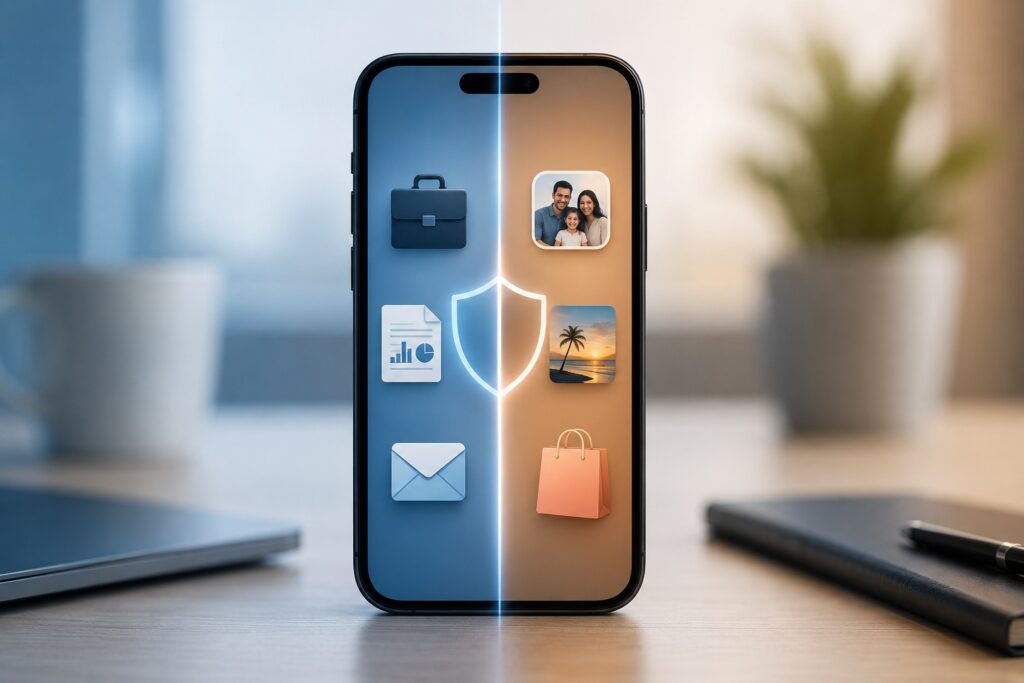
Separating personal and business data is essential for both corporate-owned and BYOD programs and getting it right drives employee adoption. Rather than accessing an employee’s personal information, MDM solutions can create a secure boundary around corporate apps, accounts, and data, letting IT manage business resources without touching personal photos, messages, or applications. If an employee leaves or a device is lost, corporate data can be removed or secured without unnecessarily affecting personal content under appropriate deployment models. That respect for privacy encourages adoption because users trust their personal data stays private.
Account governance rounds out compliance. Carrier disputes, portal management, and billing accuracy all need clear ownership typically handled by a dedicated expense management provider rather than internal staff. Managing carrier interactions, keeping account records accurate, and validating billing reduces both cost and risk, while giving regulated organizations the documentation and control their obligations require.
Frequently Asked Questions
What Specialized or Customized Services Can a Wireless Cost Reduction Firm Provide?
Every organization runs its wireless program differently, which is why our services extend well beyond invoice review. Depending on need, support can include wireless expense audits, ongoing plan optimization, carrier contract negotiation, invoice validation, inventory management, wireless policy development, carrier portal administration, order processing, reporting, cost allocation, international wireless management, and help desk services.
Organizations can also get assistance with workflow improvements, employee onboarding and offboarding, device lifecycle management, and customized reporting for finance or executive leadership.
Rather than offering one fixed package, we adapt to your operational structure and business goals — because a 200-line company and a 12,000-device health system genuinely need different things. That flexibility improves efficiency, reduces expense, and increases visibility into the wireless environment while maintaining continuity across daily operations.
What Wireless Compliance Requirements Apply to Healthcare Organizations?
Healthcare organizations must protect electronic protected health information while giving clinicians and staff secure mobile access to the tools they need — two requirements that pull against each other unless managed deliberately. We support this through MDM, Apple Business Manager, security management, inventory reconciliation, and compliance monitoring so organizations retain control of corporate devices.
A compliant mobile environment typically includes device encryption, strong authentication, secure application management, controlled access to patient information, remote lock and wipe capability, and continuous monitoring of enrolled devices. Accurate device inventories and consistently enforced policies matter just as much.
Mobile device management is an important operational control because it applies security settings automatically and enables fast response if a device is compromised. Combining centralized management with well-defined policy strengthens compliance while protecting patient information and supporting clinical productivity.
How Does HIPAA Affect Corporate Mobile Device Management?
HIPAA requires healthcare organizations to protect electronic protected health information wherever it is stored, accessed, or transmitted — smartphones and tablets included. HIPAA does not mandate a specific MDM platform, but effective device management plays a critical role in supporting compliance by enforcing consistent security controls across every managed device.
Our approach combines MDM, Apple Business Manager, inventory management, and carrier-coordinated security to strengthen governance over corporate devices. An effective HIPAA-focused strategy should include device encryption, strong authentication, automatic screen locks, controlled application deployment, secure configuration management, and remote lock or wipe capability.
Continuous compliance monitoring and consistent policy adherence complete the picture. Managing devices proactively rather than reactively reduces security risk, protects patient information, and supports ongoing HIPAA compliance while employees work efficiently.
What Wireless Regulations Apply to Government Agencies?
Government agencies operate under stricter wireless security and procurement requirements than most private organizations. Specific regulations vary by federal, state, and local jurisdiction, but agencies generally must comply with cybersecurity frameworks, records retention rules, procurement standards, and data protection requirements.
Devices accessing government systems should be centrally managed, encrypted, regularly updated, and monitored. Agencies also need clear policies governing enrollment, user authentication, remote access, and incident response. Current cybersecurity guidance emphasizes centrally managed devices, MDM, and secure deployment practices for government-owned equipment, with limited BYOD where permitted at all.
We help government organizations manage wireless environments while supporting compliance through better inventory management, policy enforcement, expense optimization, carrier management, and ongoing reporting — improving efficiency and visibility across thousands of devices without disrupting mission-critical communications.
What Is a Corporate Wireless Usage Policy and What Should It Include?
A corporate wireless usage policy sets the rules employees must follow when using company-issued devices or accessing corporate resources from approved mobile devices. A well-written policy protects sensitive information, supports consistent device management, and defines employee responsibilities clearly enough to reduce security and compliance risk.
It should address who may use corporate devices, acceptable business and personal use, password and multifactor authentication requirements, approved applications, data handling procedures, Wi-Fi and VPN usage, reporting requirements for lost or stolen devices, international travel guidelines, software update expectations, and the company’s right to manage corporate devices through MDM.
It should also define onboarding, device replacement, and offboarding procedures so data stays protected across the lifecycle. Organizations handling regulated data often require written acknowledgment before granting system access.
How Do I Enforce a Mobile Device Policy?
A policy is only as good as its enforcement, and enforcement takes both technology and process. Start by communicating the policy, explaining why it exists, and requiring employees to acknowledge it before receiving access to corporate resources. Clear expectations meaningfully improve compliance on their own.
Technology then does the heavy lifting. MDM can automatically apply security settings, require encryption, enforce passcodes, deploy approved applications, monitor compliance, and remotely lock or wipe lost devices. Conditional access policies can block non-compliant devices from company email, files, and applications entirely.
Regular audits, reporting, and periodic policy reviews keep the policy effective as technology and business needs change. Note that Apple requires organizations using MDM to inform users about management capabilities and obtain appropriate permissions where required.
What Are Wireless Regulatory Compliance Requirements for Enterprises?
Regulatory compliance requires enterprises to protect corporate data, control access to mobile devices, and align wireless policies with applicable industry regulations. Requirements vary by industry, but you should establish clear security standards for every company-owned or BYOD device touching business resources — strong authentication, device encryption, secure Wi-Fi and VPN connections, approved application management, regular software updates, and remote lock or wipe capability.
We recommend implementing MDM to enforce security policies consistently across the whole fleet. It provides centralized visibility into compliance, simplifies enforcement, and enables fast incident response.
Maintaining an accurate inventory of wireless assets, monitoring compliance continuously, and documenting policies for employees complete the picture. A proactive strategy reduces security risk while satisfying internal governance requirements and keeping employees productive.
How Do I Keep Employee Personal Data Separate on Corporate Devices?
Separating personal and business data is essential for both corporate-owned and BYOD programs — and getting it right drives employee adoption. Rather than accessing an employee’s personal information, use MDM solutions that create a secure boundary around corporate apps, accounts, and data. That lets IT manage business resources without touching personal photos, messages, contacts, or applications.
We support implementing mobility solutions that give organizations the visibility and control they need while respecting employee privacy. Business applications, email, VPN settings, and security policies can all be managed independently of personal content.
If an employee leaves or a device is lost, corporate data can be removed or secured without unnecessarily affecting personal information under appropriate deployment models. That strengthens security, simplifies compliance, and encourages adoption because users trust their personal data stays private.
Who Handles Carrier Disputes for Corporate Accounts?
Typically your wireless expense management provider or dedicated account management team. Rather than having internal employees spend hours reviewing invoices, documenting discrepancies, and negotiating with carriers, most businesses rely on specialists who already understand carrier billing practices and escalation procedures.
We work on our clients’ behalf to investigate unexpected charges, billing errors, service issues, and contract questions. That includes reviewing invoices, gathering supporting documentation, communicating directly with carrier representatives, and following each dispute through to resolution.
Managing these interactions reduces administrative work for finance, procurement, and IT while ensuring billing concerns get prompt attention. Experienced professionals also resolve issues faster because they know carrier processes and escalation paths — so you stay focused on operations knowing accounts are being actively monitored.
What Is Carrier Portal Management?
Carrier portal management is the ongoing administration of your online wireless carrier accounts. Those portals hold essential information about lines, devices, invoices, contracts, user permissions, and service requests, and managing them well requires continuous attention to keep account information accurate and secure.
We manage these portals on behalf of clients — processing moves, adds, changes, disconnects, device orders, billing inquiries, reporting, and other administrative functions. Centralized management reduces manual work, improves data accuracy, and ensures requests are completed according to company policy.
It also produces better visibility into assets and spending across the organization. Rather than having multiple employees accessing different carrier systems with inconsistent results, you get one organized process that improves efficiency while helping control cost over time.
Get Your Free Wireless Savings Audit
Ready to see what your organization could save? Wireless Experts offers a free, no-obligation wireless savings audit — a detailed, line-by-line review of your carrier invoices, rate plans, and usage. You keep your existing carrier, phone numbers, and devices, and there is no upfront cost. Contact us at wirelessexperts.us to request your free audit and savings report.