

The telecom management world is full of acronyms TEM, WEM, MMS and they get used interchangeably even though they describe genuinely different things. If you are trying to figure out what kind of help your organization actually needs, the confusion is a real obstacle, because choosing the wrong category means paying for capabilities you do not need or missing the ones you do.
At Wireless Experts, we specialize in the wireless side of this landscape, so we can explain the distinctions clearly. This guide defines Telecom Expense Management, Wireless Expense Management, and Managed Mobility Services, explains how they differ and overlap, covers how providers charge, and helps you determine which approach fits your organization.
What Telecom Expense Management (TEM) Is
Telecom Expense Management is the discipline of managing, auditing, optimizing, and controlling an organization’s telecommunications spend wireless services, voice, data, internet, and mobility costs. Real TEM goes far beyond an annual invoice check. It includes ongoing invoice validation, plan optimization, contract management, inventory oversight, carrier relationship management, reporting, policy enforcement, and continuous monitoring of employee usage.
The mindset shift matters most: telecom expenses are not fixed costs. Treated as managed costs, they can be continuously optimized improving operational efficiency while service to employees stays uninterrupted. A TEM company reduces costs, improves visibility, and simplifies the management of telecom and wireless services, and the strongest providers pair technology with experienced specialists who actively perform the work rather than just surfacing data.
What Wireless Expense Management (WEM) Is
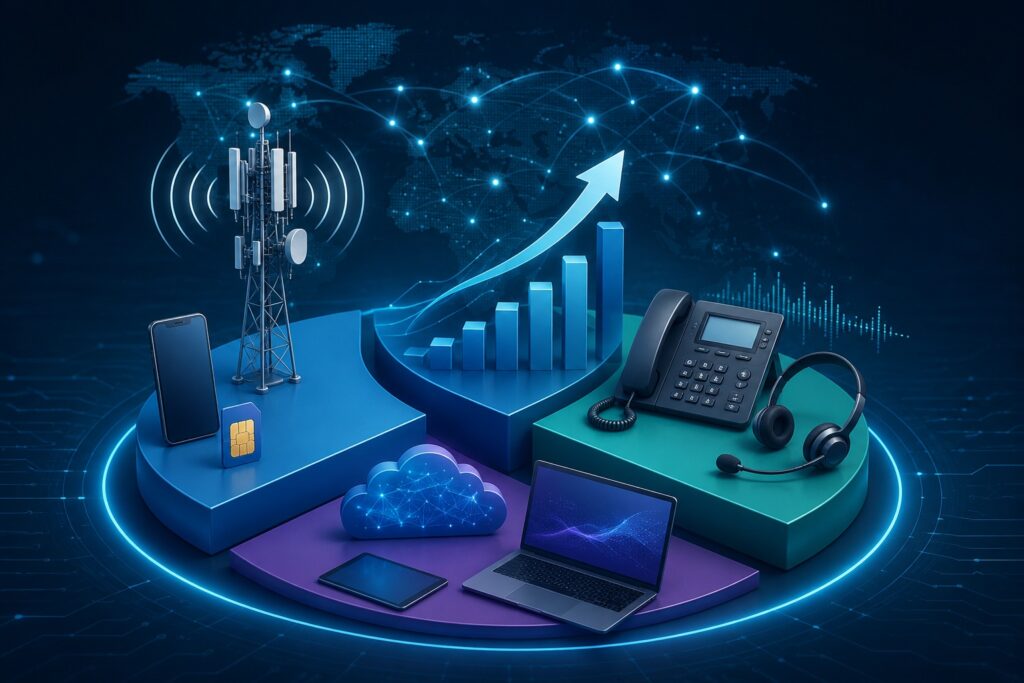
Wireless Expense Management is the specialized subset of TEM focused exclusively on cellular devices, mobile plans, wireless invoices, and enterprise mobility. Where traditional TEM spans everything, WEM is purpose-built for mobility: phones, tablets, hotspots, wireless data plans, and the cellular services employees rely on daily.
Wireless deserves that specialization. Managing it well requires far more than reviewing invoices ongoing rate plan optimization, contract negotiations, inventory reconciliation, device lifecycle management, carrier portal administration, help desk support, MDM coordination, and continuous monitoring. Our approach relies on detailed line-by-line analysis rather than software algorithms alone, which is how we find the permanent savings automated tools miss, while clients keep the same carrier, devices, and phone numbers.
The difference between TEM and WEM comes down to scope and depth. TEM is broad; WEM is deep in mobility. Organizations whose largest and most complex communications spend is wireless usually benefit most from the specialized approach.
What Managed Mobility Services (MMS) Is
Managed Mobility Services solve a different problem than TEM or WEM. Where expense management manages the money, MMS manages the operation the full lifecycle of mobile devices and the daily work of running a mobility program. MMS typically covers device procurement, activations, upgrades, moves, adds, changes, disconnects, inventory management, carrier support, help desk services, and ongoing user support.
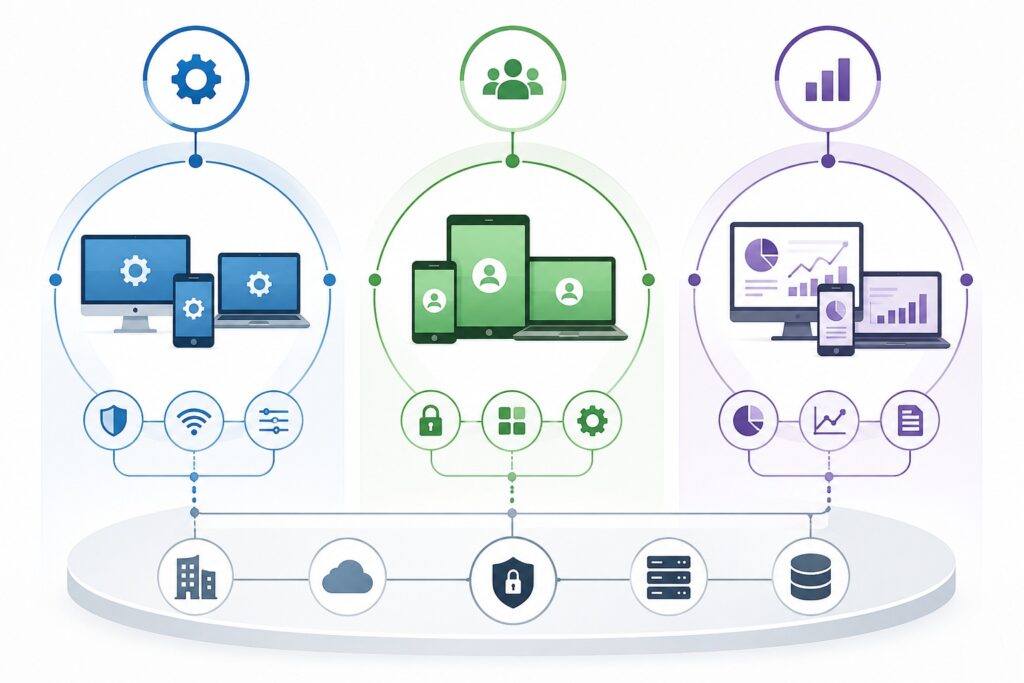
Put simply: TEM and WEM make sure you are paying the right amount; MMS makes sure the mobile environment runs smoothly every day. Most organizations get the best result from combining both expense management finds and protects the savings, while mobility services carry the operational workload that keeps employees connected. Together they cut costs, improve visibility, and take a substantial burden off internal IT.
How Providers Charge and Which Model Fits You
Pricing models vary across the industry. Some providers charge a fixed monthly management fee based on the number of lines or assets under management. Others use project-based fees for audits or implementation. And some including us offer contingency or shared-savings pricing, where compensation is tied to the verified savings actually delivered. Under a gain-share model, if there are no savings, there is no fee.
The bigger choice is software versus managed service. TEM software provides visibility dashboards, reporting, workflow automation but software does not optimize plans, negotiate with carriers, or handle daily administration. A managed service combines technology with experienced professionals who actively do that work on your behalf. Organizations with dedicated internal telecom teams may do well with software alone; businesses lacking the time or expertise usually realize far greater value from a managed service, and many find the best results come from combining both.
Frequently Asked Questions
What Is Telecom Expense Management (TEM)?
Telecom Expense Management is the discipline of managing, auditing, optimizing, and controlling an organization’s telecommunications spend wireless services, voice, data, internet, and mobility costs. Our practice puts particular weight on the wireless side, because that is where most enterprises leak the most money with the least visibility.
Real TEM goes far beyond an annual invoice check. It includes ongoing invoice validation, wireless plan optimization, contract management, inventory oversight, carrier relationship management, reporting, policy enforcement, and continuous monitoring of employee usage. We also support clients with carrier portal management, customized reporting, help desk services, asset management, workflow improvements, and contract negotiations.
The mindset shift matters most: telecom expenses are not fixed costs. Treated as managed costs, they can be continuously optimized improving operational efficiency while service to employees stays uninterrupted.
What Does a Telecom Expense Management Company Do?
A TEM company reduces costs, improves visibility, and simplifies the management of telecom and wireless services. Our engagements start with auditing wireless invoices to identify billing errors, unused services, inefficient rate plans, and cost reduction opportunities. From there, we recommend and implement improvements that lower recurring expense while wireless service stays reliable.
But cost reduction is only half the job. We also take on the day-to-day administration of enterprise wireless programs: carrier contract negotiations, online portal management, custom reporting, wireless help desk support, device lifecycle management, policy enforcement, asset tracking, usage monitoring, international roaming management, and workflow improvements.
The objective is twofold — cut wireless costs and give your teams back their time. Ongoing management keeps spending optimized as business needs change, so the improvement is permanent rather than a snapshot.
What Does a Wireless Cost Reduction Company Do?
A wireless cost reduction company lowers your cellular and wireless expenses without disrupting operations. Our process begins with a free, detailed line-by-line audit of carrier invoices, identifying billing errors, unnecessary services, outdated rate plans, inactive lines, contract opportunities, and every other place savings hide. The consistent principle: maximize savings while you stay with your existing carrier wherever possible.
We also stay engaged after the report. Ongoing services include plan optimization, carrier contract negotiations, custom reporting, wireless help desk support, carrier portal management, asset management, policy enforcement, international cost management, and continuous usage monitoring.
The goal is permanent, measurable savings paired with a lighter administrative load on your IT, procurement, finance, and telecom teams. Continuous management of the environment is what ensures you pay only for the services the organization actually needs — every month, not just the first one.
What Is the Difference Between TEM and Wireless Expense Management?
They are related but not the same. Telecom Expense Management (TEM) is the broad discipline covering an organization’s overall telecommunications spend — wireline services, internet circuits, cloud communications, and wireless. Wireless Expense Management (WEM) is the specialized subset focused exclusively on cellular devices, mobile plans, wireless invoices, and enterprise mobility.
Wireless deserves that specialization. Managing it well requires far more than reviewing invoices: ongoing rate plan optimization, contract negotiations, inventory reconciliation, device lifecycle management, carrier portal administration, help desk support, MDM coordination, Apple Business Manager, customized reporting, and continuous monitoring.
Our approach relies on detailed line-by-line analysis rather than software algorithms alone, which is how we find the permanent savings automated tools miss — while clients keep the same carrier, devices, phone numbers, and daily operations. The payoff is lower wireless expense, better administrative efficiency, and real visibility across the entire mobile environment.
How Does Managed Mobility Services (MMS) Differ from TEM?
They solve different problems. TEM manages the money: auditing invoices, validating carrier billing, optimizing rate plans, controlling costs, and reporting across the telecommunications environment. MMS manages the operation: the full lifecycle of mobile devices and the daily work of running a mobility program.
MMS typically covers device procurement, activations, upgrades, moves, adds, changes, disconnects (MACDs), inventory management, carrier support, help desk services, and ongoing user support. Put simply — TEM makes sure you are paying the right amount; MMS makes sure the mobile environment runs smoothly every day.
Most organizations get the best result from combining both, which is how we structure our engagements. Expense management finds and protects the savings; mobility services carry the operational workload that keeps employees connected. Together they cut costs, improve visibility, and take a substantial burden off internal IT.
What Is Wireless Expense Management (WEM)?
Wireless Expense Management is the ongoing process of controlling, optimizing, and managing an organization’s wireless services, devices, and carrier expenses. Where traditional telecom expense management spans everything, WEM is purpose-built for mobility: phones, tablets, hotspots, wireless data plans, and the cellular services employees rely on daily.
A real WEM program is much more than checking invoices. Ours includes invoice auditing, rate plan optimization, usage analysis, inventory management, carrier relationship management, billing validation, and continuous monitoring that catches new savings opportunities as usage changes. The objective: eliminate unnecessary spend without ever compromising the wireless service the business runs on.
Done well, WEM also gives you visibility into every line — surfacing inactive devices, unnecessary services, and billing discrepancies before they become recurring costs. Continuous optimization, rather than one-time reviews, is what keeps costs controlled, administration simple, and the environment efficient as the business evolves.
Do I Need TEM Software or a TEM Service?
It comes down to your internal resources. TEM software gives you visibility — collecting invoice data, tracking inventory, generating reports, and flagging potential savings. But software does not do the work. Your staff still has to review the reports, resolve billing disputes, negotiate with carriers, implement recommendations, and keep optimizing month after month.
We deliver a managed service precisely because of that gap. A managed engagement pairs technology with experienced specialists who continuously analyze invoices, validate carrier billing, optimize rate plans, manage carrier relationships, and implement the recommendations on your behalf — dramatically reducing the workload on internal IT, finance, and procurement.
For organizations with large or complex wireless environments, the managed approach usually delivers more long-term value, because optimization becomes a continuous process rather than a report someone has to act on. You get expert oversight and measurable savings without dedicating internal headcount to carrier accounts every month.
What Is the ROI of Telecom Expense Management?
The return comes from two directions: reduced telecom and wireless spend, and reclaimed staff time. On the spend side, savings come from identifying billing errors, optimizing rate plans, eliminating unused services, improving inventory accuracy, and strengthening contract management. On the time side, your people stop spending hours on invoices, billing disputes, and account administration.
We emphasize continuous optimization because that is what protects the return. Usage, devices, and requirements never stop changing; ongoing monitoring keeps expenses aligned with actual needs and prevents costs from creeping back after the initial project.
There is also value that does not show up as a line item: better reporting, real financial visibility, simpler accounts payable, and more effective wireless administration. Direct savings plus reduced administrative effort produces a return that extends well past the monthly carrier invoice.
How Do TEM Providers Charge for Their Services?
Pricing models vary across the industry. Some providers charge a fixed monthly management fee based on the number of lines or telecom assets under management. Others use project-based fees for audits, consulting, or implementation. And some — including us — offer contingency or shared-savings pricing, where compensation is tied to the verified savings actually delivered.
We lean into the performance-based approach: our savings audits are free, and our ongoing optimization is built to produce measurable financial results, because that is what we are paid on.
When evaluating any provider, look past the pricing model itself. Understand exactly what is included, whether optimization is ongoing or one-time, how savings are measured, what reporting you receive, and whether carrier management, invoice validation, and operational support are part of the engagement. Pricing aligned with measurable outcomes generally serves enterprise organizations best.
What Is a Contingency-Based (Gain-Share) TEM Model?
A contingency-based, or gain-share, model means the TEM provider is paid from the verified savings it generates — not from upfront implementation or consulting fees. You pay a percentage of the cost reductions, billing credits, refunds, or contract savings actually identified and recovered. If there are no savings, there is no fee.
It is the model we work under, and we prefer it because the incentives are honest: the provider is motivated to find every possible savings opportunity, and the client carries minimal financial risk. A gain-share engagement typically includes invoice auditing, contract reviews, wireless plan optimization, inventory validation, and dispute management.
For organizations that want measurable ROI without committing significant budget before seeing results, this structure is particularly attractive — the provider only wins when you do, and continuous optimization beats one-time audits under this model by design.
Get Your Free Wireless Savings Audit
Ready to see what your organization could save? Wireless Experts offers a free, no-obligation wireless savings audit — a detailed, line-by-line review of your carrier invoices, rate plans, and usage. You keep your existing carrier, phone numbers, and devices, and there is no upfront cost. Contact us at wirelessexperts.us to request your free audit and savings report.