

The parts of a wireless environment that generate cost fastest are the ones companies watch least: employees roaming abroad, accounts spread across countries, and the growing fleet of connected IoT devices quietly consuming data. A single unmanaged international trip can add more to a bill than a month of normal domestic usage and multiplied across travelers and devices, the exposure is significant.
At Wireless Experts, we treat international and connected-device costs as a planning problem to solve before the charges land, not a billing surprise to dispute after. This guide covers reducing international wireless costs, how global roaming and eSIM work for travelers, managing wireless across countries, and controlling IoT and M2M cellular spend.
Reducing International and Roaming Costs
International costs escalate quickly through roaming charges, international data, voice calls, and inconsistent pricing across countries. Companies that regularly send employees abroad should manage international mobility proactively rather than relying on standard domestic plans. We reduce international expense by reviewing travel patterns, evaluating usage requirements, and recommending the most cost-effective carrier options within your existing environment optimizing international features, selecting appropriate travel plans, and catching unnecessary charges before they become recurring.
Global roaming plans let employees use their existing business number and device while traveling, through agreements between their home carrier and partner networks abroad. Rather than applying the same plan to every traveler, we evaluate roaming options based on travel frequency, destinations, and expected usage. For extended stays in a single country, a local SIM can sometimes deliver lower ongoing cost, while frequent travelers between multiple countries usually do better with an international business plan planning ahead is consistently cheaper than disputing charges after the fact.
How eSIM Helps Corporate Travelers
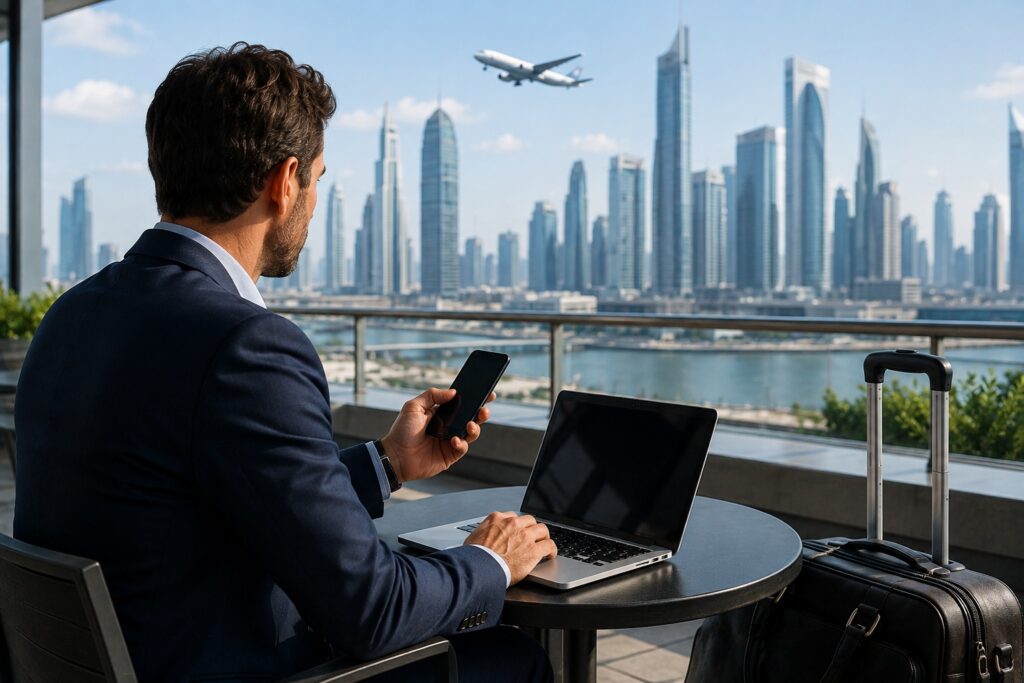
An eSIM is a digital SIM built into a compatible device that lets users activate or switch mobile service without inserting a physical card. For businesses with frequent travelers, it simplifies international connectivity by letting devices download carrier profiles remotely no local SIM purchases or carrier-store visits required. It also lets IT provision, activate, or update service without physically handling the device.
For multinational organizations, eSIM improves flexibility by helping employees stay connected across countries while reducing downtime and simplifying device management. It also supports business continuity by making it easier to change carrier profiles when coverage or requirements change. As part of an overall wireless strategy, eSIM adoption can be evaluated alongside carrier plans, roaming strategies, and ongoing expense management so travelers get reliable service while cost stays controlled.
Managing Wireless Across Multiple Countries
Managing wireless across countries takes more than negotiating carrier contracts. Multinational companies often deal with different carriers, currencies, billing systems, tax structures, and regulatory requirements, and complexity grows with every new market. Without centralized oversight, you get inconsistent pricing, duplicate services, and limited visibility into global spend.
We simplify international management by providing centralized visibility into invoices, inventory, usage trends, and optimization opportunities across all locations. Regular invoice reviews, plan optimization, and policy management maintain consistent controls while regional offices still meet local requirements. International travelers, field employees, and remote teams also benefit from coordinated roaming strategies that reduce unnecessary charges. Managing expense globally rather than country by country gives you greater financial control, improved reporting, and a more consistent management process across the entire organization.
Controlling IoT and M2M Cellular Costs
IoT consulting helps businesses design, deploy, manage, and optimize connected devices that communicate over cellular networks asset trackers, sensors, fleet systems, medical devices, and industrial equipment. Every connected device generates wireless cost that should be monitored across its lifecycle. Managing IoT and machine-to-machine costs requires continuous visibility into every device and its usage, because as deployments expand into thousands of devices, unused connections, inappropriate rate plans, and unexpected data consumption drive cost up quickly.
The best plan for an IoT device depends on how it is used data consumption, coverage, and communication frequency. Unlike smartphones, IoT devices often transmit small amounts of data at scheduled intervals, so matching connectivity to the actual usage profile matters more than picking the largest data package. Auditing IoT SIM and data costs starts with a complete inventory of every active SIM and device, then comparing invoices against usage to identify inactive SIMs, unexpected consumption, and devices on the wrong plans. Regular optimization keeps IoT environments scaling efficiently without letting wireless costs outpace business needs.

Frequently Asked Questions
How Do Companies Reduce International Wireless Costs?
International costs escalate quickly through roaming charges, international data, voice calls, and inconsistent pricing across countries. Companies that regularly send employees abroad should manage international mobility proactively rather than relying on standard domestic plans. Planning before travel is usually the most effective way to control cost while keeping employees connected.
We help reduce international expense by reviewing travel patterns, evaluating international usage requirements, and recommending the most cost-effective carrier options available within your existing environment. That may include optimizing international features, selecting appropriate travel plans, monitoring roaming activity, and catching unnecessary charges before they become recurring.
Ongoing management also improves visibility into international usage, so you can respond quickly when costs start rising. Combining proactive planning with continuous invoice review and usage analysis significantly reduces international spend while keeping employees productive wherever business takes them.
What Are International Wireless Services for Enterprises?
International wireless services let employees stay connected while traveling or working across multiple countries without sacrificing productivity or security. They typically include international voice, messaging, mobile data, roaming plans, global connectivity options, and business support designed for organizations with international operations or traveling staff.
We help enterprises evaluate these services based on actual business requirements rather than one-size-fits-all carrier offerings. By reviewing travel frequency, destinations, data usage, and operational needs, you can select international services that balance performance against cost efficiency — reliable global connectivity without unnecessary roaming charges or billing surprises.
Effective international management also includes ongoing monitoring, invoice validation, and regular optimization as travel patterns change. That keeps spending predictable, improves the employee experience abroad, and ensures your international mobility strategy continues supporting growth without creating unnecessary operational or financial risk.
How Do Global Roaming Plans Work for Business Travelers?
Global roaming plans let employees use their existing business number, device, and service while traveling internationally, through agreements between their home carrier and partner networks abroad. Instead of buying new service for every destination, employees keep making calls, sending messages, and using data while traveling — though roaming charges and available features vary by carrier and plan.
We recommend evaluating roaming plans based on travel frequency, destinations, and expected usage rather than applying the same plan to every traveler. Organizations with frequent international travel usually benefit from proactive planning, usage monitoring, and ongoing optimization to avoid unnecessary roaming expense.
By reviewing invoices, monitoring international usage, and selecting the right roaming options before travel begins, businesses improve cost control while keeping employees connected throughout their trips without disruption.
Should Companies Use Local SIMs or International Plans Abroad?
It depends on how employees travel and how long they stay. For short-term trips or frequent travel between multiple countries, international business plans are usually more convenient because employees keep their existing business number without swapping SIM cards. For extended stays in a single country, a local SIM or regional solution can sometimes deliver lower ongoing service cost.
We recommend evaluating travel patterns before choosing. Trip duration, number of destinations, expected data usage, security requirements, and administrative complexity all matter, and a single approach rarely fits every employee or department.
By reviewing international travel requirements as part of your overall expense management strategy, you can select the most cost-effective option for each situation — maintaining productivity, simplifying administration, and avoiding unnecessary international expense.
What Is eSIM and How Does It Help Corporate Travelers?
An eSIM is a digital SIM built into a compatible device that lets users activate or switch mobile service without inserting a physical card. For businesses with frequent travelers, it simplifies international connectivity by letting devices download carrier profiles remotely — no local SIM purchases or carrier-store visits required. It also lets IT provision, activate, or update service without physically handling the device.
For multinational organizations, eSIM improves flexibility by helping employees stay connected across countries while reducing downtime and simplifying device management. It also supports business continuity by making it easier to change carrier profiles when coverage or requirements change.
As part of an overall wireless strategy, we can help evaluate eSIM adoption alongside carrier plans, roaming strategies, and ongoing expense management so travelers get reliable service while cost stays controlled.
How Do Multinational Companies Manage Wireless Across Countries?
Managing wireless across countries takes more than negotiating carrier contracts. Multinational companies often deal with different carriers, currencies, billing systems, tax structures, and regulatory requirements, and complexity grows with every new market. Without centralized oversight, you get inconsistent pricing, duplicate services, and limited visibility into global spend.
We simplify international management by providing centralized visibility into invoices, inventory, usage trends, and optimization opportunities across all locations. Regular invoice reviews, plan optimization, and policy management maintain consistent controls while regional offices still meet local requirements. International travelers, field employees, and remote teams also benefit from coordinated roaming strategies that reduce unnecessary charges.
Managing expense globally rather than country by country gives you greater financial control, improved reporting, and a more consistent management process across the entire organization.
What Is IoT Consulting for Businesses?
IoT consulting helps businesses design, deploy, manage, and optimize connected devices that communicate over cellular networks. Whether you run asset trackers, smart sensors, fleet management systems, medical devices, or industrial equipment, every connected device generates wireless cost that should be monitored and controlled across its lifecycle.
We focus on the wireless expense side of IoT — helping you understand connectivity requirements, review carrier agreements, evaluate usage, and identify opportunities to reduce ongoing cellular expense. Rather than a one-size-fits-all solution, the goal is aligning IoT connectivity with business objectives while improving efficiency and cost control.
An effective strategy also includes inventory management, invoice validation, usage monitoring, and regular optimization so devices stay on the most appropriate plans as deployments grow. That maximizes the value of your IoT investment while avoiding unnecessary wireless expense.
How Do Companies Manage IoT and M2M Cellular Costs?
Managing IoT and machine-to-machine cellular costs requires continuous visibility into every connected device and its usage. As deployments expand, you may be managing thousands of sensors, trackers, gateways, and other devices, each generating recurring charges. Without ongoing monitoring, unused devices, inappropriate rate plans, and unexpected data consumption drive cost up quickly.
We improve IoT cost management by reviewing invoices, monitoring device usage, identifying inactive or underutilized connections, and recommending plan optimization based on actual device requirements. Regular reporting and inventory management also make it easier to track device status and maintain accurate billing records.
Rather than simply cutting monthly invoices, the objective is a long-term strategy that supports reliable IoT connectivity while controlling expense. Ongoing optimization lets organizations scale IoT environments efficiently without letting wireless costs outpace business needs.
What Are the Best Cellular Plans for IoT Devices?
The best plan depends on how the device is used — how much data it consumes, where it operates, and how often it communicates. Unlike smartphones, IoT devices often transmit small amounts of data at scheduled intervals, which makes traditional business plans a poor fit for many deployments. Choosing the right plan means matching connectivity to the device’s actual usage profile rather than picking the largest data package.
We recommend evaluating each deployment individually — reviewing data consumption, geographic coverage, roaming requirements, expected device lifespan, and carrier options. Organizations with large IoT fleets may also benefit from pooled data plans, customized enterprise agreements, and ongoing usage monitoring to prevent unnecessary cost.
Regular optimization keeps devices on the most cost-effective plans as requirements change — maintaining reliable connectivity, improving visibility, simplifying management, and reducing long-term cellular expense.
Get Your Free Wireless Savings Audit
Ready to see what your organization could save? Wireless Experts offers a free, no-obligation wireless savings audit — a detailed, line-by-line review of your carrier invoices, rate plans, and usage. You keep your existing carrier, phone numbers, and devices, and there is no upfront cost. Contact us at wirelessexperts.us to request your free audit and savings report.